The Budget Gap: Sustaining City Services into 2027 and Beyond

The Corvallis City Council is working to address a gap in funding that will impact core services as early as 2027. This page includes information about the Council's decision-making process, an overview of solutions under consideration and a brief history of how we got here.
The Budget Gap: Corvallis is Not Alone
The budget gap is driven by both the inability for current revenue streams to keep pace with the rising costs for existing City services as well as capital funding needed to address long-term facility needs that have been unfunded for decades. Together, the financial need is about $20 million annually.
This budget gap is the long-term result of statewide legislation passed in the 1990s that sharply reduced how much revenue cities receive from property taxes. Meanwhile, costs to deliver community services (public safety, parks and recreation, library, and other livability services) have only increased. Baseline property tax revenue does not fully cover the costs to provide these core services, and that investment continues to shrink each year.
Corvallis is not alone in this challenge. As the League of Oregon Cities describes, "All cities in Oregon are grappling with the same long-term challenges...The inflexibility in the property tax system is forcing cities and towns across the state to cut services residents depend on. After more than a decade of finding efficiencies and absorbing cuts, communities of all sizes are reaching the limits of what local budgets can provide."
The City has taken measures over the last decade to try to mitigate and keep up with rising costs of existing services. However, our current tools have taken us as far as we can go. Without new, sustainable revenue streams, the City will be forced to reduce or cut current and critical services.
The bill has come due in Corvallis, and now, our elected leaders must make difficult decisions to ensure sustainable funding for community services.
Read more
Visit any of the links below to learn more about the cost of community services, a brief history of how we got here, and the solutions on the table.

At its core, the City's budget gap is a simple, unavoidable concept: the costs of maintaining City services and operations are growing at a faster rate than the City’s current revenue streams.
This means in the coming years, the City will be required to reduce core community services if it does not implement new revenue streams.

The City of Corvallis has taken steps to plan for and invest in core community services over the last 10 years.
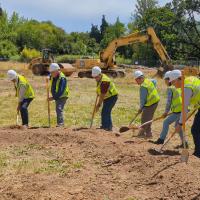
The City Council has been working for years to make improvements to the facilities that are used to deliver community services to the public. Decades of under-investment in these facilities have resulted in buildings and public spaces that are increasingly undersized, outmoded, and approaching the end of their service life. You can find a brief overview of the findings and work that has been done in this short explainer.

To address the long-term challenges of the rising costs and limited resources, the City Council is focusing on equitable, sustainable revenue solutions that can strategically support community services for years to come.
Starting last year, the Council evaluated a field of more than two dozen options and narrowed down to two solutions that could work for Corvallis. You can follow the Council's decision-making process on the City website. Here are tools the Council is considering:
This page tracks the City Council’s decision-making process for the budget gap in the 2027-2029 biennial budget.
"Corvallis is a full-service city." You might have heard that before ... but what does it mean?
Every two years, the Corvallis City Council makes decisions about how to direct financial resources to deliver the programs and services that the community relies on. A key part of understanding how the city budget comes together is the concept of dedicated revenue — different pots of money within the city budget that must be spent on specific services.

Two statewide ballot measures approved more than 30 years ago have continued to have a profound effect on how cities can generate revenue to support community services decades later.
Measures 5 and 50 were approved by Oregon voters in the 1990s. Together, they changed how property taxes are calculated for all types of properties - everything from industrial factories to small businesses to your own home. They also put strict limits on how much property taxes can increase each year.
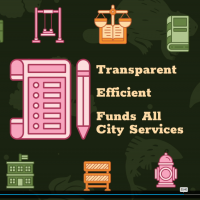
Every two years, the City of Corvallis builds a budget so we can fund public services for our community. Everything from community policing and fire protection, to livability services from the library and parks & recreation, to public utilities and street maintenance – we plan for it all through our biennial budget. Let’s take a closer look at how that process unfolds and how you can get involved.


