Neighborhood Bikeways

Click here for information on the Neighborhood Bikeway Prioritization Project.
What are Neighborhood Bikeways?
Neighborhood bikeways are typically low-volume, low-speed residential streets, where people feel comfortable walking, biking, and rolling. Safety is improved along these corridors by prioritizing people and providing low-stress routes for individuals traveling by foot or wheel, while still accommodating motor vehicle traffic and on-street parking. These routes are vital connectors between neighborhoods, parks, schools and business districts.
What elements make up a Neighborhood Bikeways?
Pavement Markings & Bicycle Guide Signage
Signs and pavement markings are the minimum treatments necessary to designate a street as a neighborhood bikeway. Together, they visibly differentiate neighborhood bikeways from other local streets, reminding people driving to watch for bicyclists.
Signage informs bicyclists that they are on the proper route, and alerts them to upcoming decisions, turns, or destinations.
Pavement markings can guide users through jogs in the route and help them navigate around busy intersections. The primary marking for neighborhood bikeways is the shared roadway marking, also known as the sharrow.
Traffic Calming
Traffic calming measures consist of devices that reduce motor vehicle speeds closer to cycling speeds and/or reduce motor vehicle volumes, thereby making the neighborhood bikeway a safer, more pleasant bicycle route.
- Speed humps are a familiar tool to reduce motor vehicle speeds.
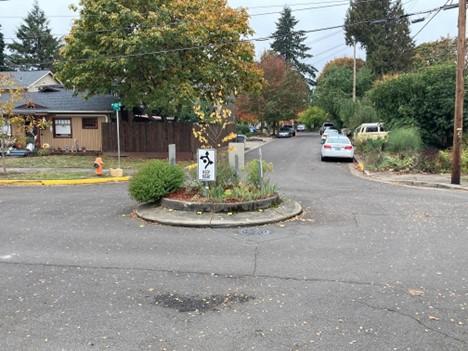
- Neighborhood traffic circles reduce motor vehicle speeds, and eliminate the need for people cycling to stop as is the case where stop signs are provided. Visit the Traffic Circle FAQ page for more information.
- Curb bulb-outs (examples shown below) extend the sidewalk into the parking lane to narrow the roadway. This increases the visibility of a person at the intersection, gives more safe waiting space and shortens their crossing distance. This also encourages slower, safer vehicular turning speeds for vehicles.
Neighborhood Bikeways in Corvallis
The City’s Transportation System Plan identifies a network of low-stress bicycle routes that are proposed to become future neighborhood bikeways. Corvallis’ first neighborhood bikeway was the 11th Street Bikeway. Future projects are listed in the table below.
| Project | Estimated Project Date |
| NW Tyler Avenue Neighborhood Bikeway (NW 1st St to NW Kings Blvd) | Fall 2026 |
| Neighborhood Bikeway Prioritization and Scoping Project | January 2027 |
| SE Corvallis Neighborhood Bikeway (Crystal Lake Drive to SE Goodnight Ave) | 2026-2027 |
| NW 26th/27th Street Neighborhood Bikeway (NW Monroe Ave to NW Walnut Blvd) | 2026-2027 |
| NW 16th/17th Street Neighborhood Bikeway (NW Monroe Ave to NW Grant Ave) | 2028-2029 |
| 11th Street Neighborhood Bikeway (NW Cleveland Ave to NW Harrison Blvd) | Completed |
| 11th Street Neighborhood Bikeway (NW Harrison Blvd to SW E Ave) | Completed |
Opens in new window
PDF Download
Word Download
Excel Download
PowerPoint Download
Document Download